Shipment coordination for growing teams

From order to loading,
everyone knows the next step.

CargoFlow gives sales, logistics and warehouse one shared view of every shipment, its documents and deadlines.

Clear ownership Live document status Built for real operations
CargoFlow
MM
THURSDAY, 6 AUGUST

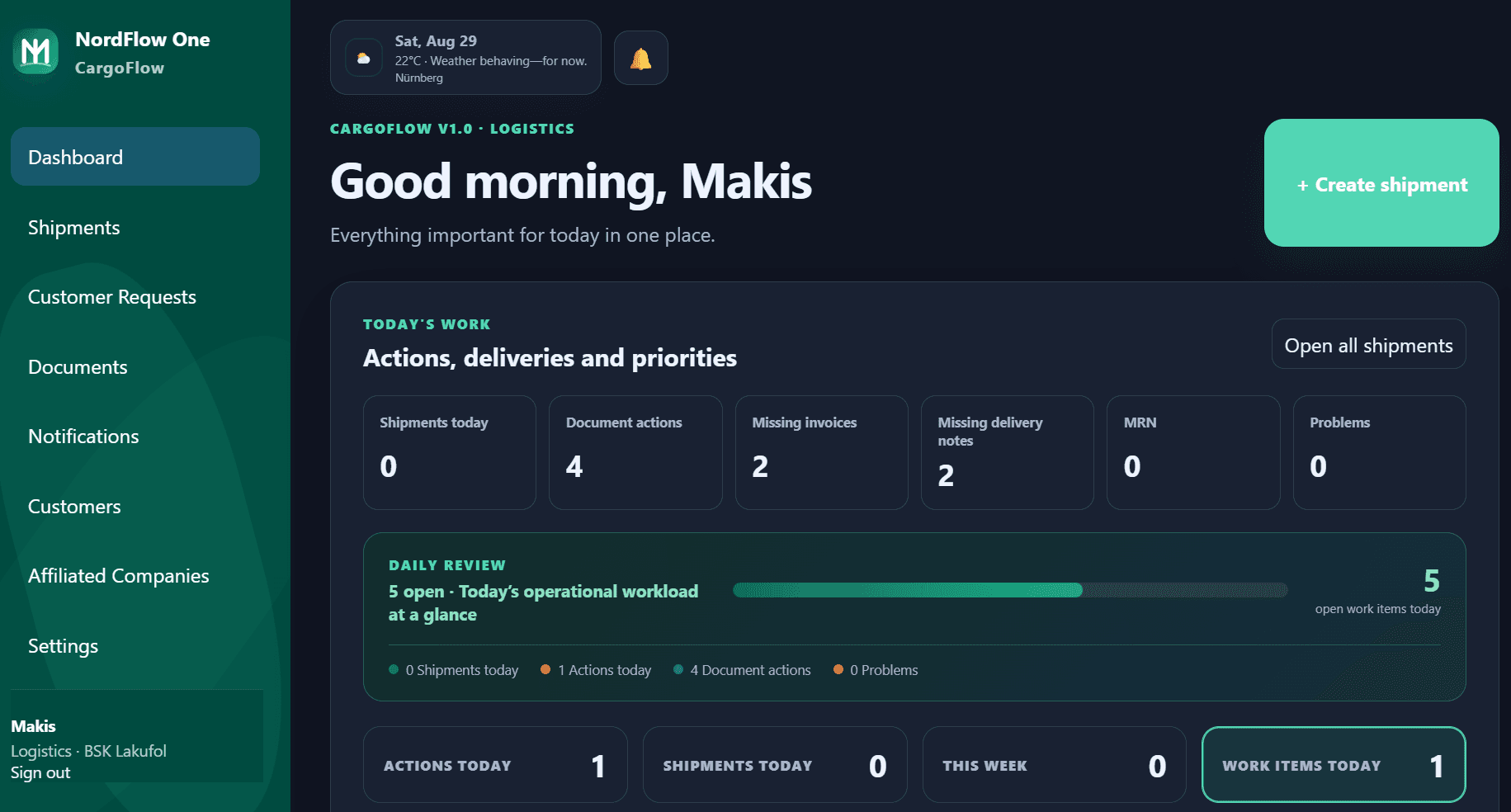
Good morning, Makis.

ACTIONS TODAY08↑ 3 ready
SHIPMENTS TODAY042 loading
DOCS TO COLLECT03Needs attention
Today's workView all →
09:30DK → DENF-1048 · CopenhagenREADY4/4 docs
11:00DE → RSNF-1049 · BelgradeIN TRANSITMRN missing
14:15DE → AUNF-1050 · MelbournePENDING2/5 docs
Loading completedShipment NF-1047 · just now

A clearer way to manage daily work.

NordFlow brings updates, tasks and shipment information into one clear view.

01

See your tasks clearly

Each team sees its own work, deadlines and responsibilities in one place.

02

Reduce emails and follow-ups

Missing documents and handovers become clear tasks with an assigned owner.

03

Know what changed

Updates, files and status changes stay together in the shipment history.

Connected tools.
For growing operations.

Start with shipment coordination and add other workspaces as your operation grows.

COMING SOON02

Workspace

A shared workspace for people, projects and reporting—designed to grow with your organisation.

  • PersonalFlow
  • ProjectFlow
  • AnalyticsFlow
COMING SOON

From request to loading.
Track each step.

Managers, logistics and warehouse teams see the same shipment, with the tasks relevant to them.

See if CargoFlow fits your team
  1. 01

    Plan the shipment

    Create the job, assign the responsible teams and define the loading window.

  2. 02

    Collect what’s needed

    Invoice, delivery note, MRN and waybill become clear actions—not buried messages.

  3. 03

    Complete the loading

    Warehouse confirms the loading while logistics keeps the overview.

  4. 04

    Keep the record

    Every confirmation, change and document stays attached to the shipment.

Clear enough to start.

Start with one team and one workflow. CargoFlow replaces scattered emails, spreadsheets and status questions with visible shipment ownership, document readiness and loading progress—without forcing a company to replace everything on day one.

01

How quickly can we start?

Most teams can begin with a small beta group, assign their roles and create their first shipment in one short setup session.

02

Who is it for?

Managers, logistics, warehouse, customs, accounting, affiliated companies and customers each see the work relevant to them.

03

What about security?

Access is role-based and company-scoped. Invitations are controlled, external access can be revoked, and permissions are enforced by backend access controls.

04

What happens to our data?

Shipment records, updates and documents stay connected to the relevant company and shipment history. Hosting, retention and data-processing terms will be finalized before commercial release.

05

Can customers see our internal work?

No. Only shipments explicitly shared with an individual customer or affiliated company become visible to that external account.

06

What support is included?

Beta participants receive direct onboarding support and can shape the workflow with practical feedback from their operation.

07

What is included in the beta?

Shipment coordination, role-based work, document status, loading updates, history and controlled customer or affiliate visibility. There is no paid subscription during evaluation.

08

Can we export our information?

Export and retention details will be finalized before commercial release. During beta onboarding, data-handling expectations are agreed with each participating company.

09

What does CargoFlow replace?

It brings shipment information currently split across emails, spreadsheets and separate status messages into one operational view for the responsible people.

Ready for
clearer daily work?

CargoFlow is being tested with real logistics teams. Join the beta and help improve shipment coordination for your operation.

Request beta access No commitment. We’ll start with a short conversation about your current process.